
The Role of Open Banking in Modern Financial Services
Discover how open banking transforms financial services—link accounts, gain transparency, and plan smarter with tools like Findex.

Financial management has undergone a seismic shift with the advent of open banking. This groundbreaking development leverages technology to securely link multiple financial accounts, providing individuals and businesses with greater transparency and control. Beyond its foundational role in financial connectivity, open banking is driving innovation in private banking and wealth management, delivering tailored solutions to meet advanced financial planning needs. This blog explores how open banking integration is transforming financial services and how tools like Findex facilitate seamless asset tracking and decision-making.
What is Open Banking?
Open banking refers to the practice of securely sharing financial data—such as transaction histories and account balances—between banks, fintech companies, and authorized third parties through application programming interfaces (APIs). This system fosters innovation by allowing developers to build more integrated and user-centric financial tools.
Key Features of Open Banking
Centralized Financial Overview:
Customers can view all financial accounts across multiple providers in one interface.
Enhanced Security:
Modern encryption protocols ensure that data sharing remains safe and compliant with regulations, such as the General Data Protection Regulation (GDPR) and other regional data laws.
Automation and Efficiency:
Automated updates eliminate the need for manual tracking, giving individuals accurate and timely financial insights.
How Open Banking Improves Financial Transparency
Traditionally, managing financial accounts across different banks and platforms meant juggling multiple apps, statements, and spreadsheets. Open banking eliminates these silos by linking financial accounts into one accessible platform.
Improved Visibility and Control
Open banking integration provides users with a real-time snapshot of their financial health. By consolidating accounts into one central view, individuals can:
- Track expenses and cash flow effortlessly.
- Identify inconsistent charges or fees.
- Spot opportunities for investment with unused funds.
For businesses, this transparency simplifies budgeting and cash flow management, enabling better decision-making and long-term planning.
Data-Driven Insights for Better Planning
With open banking, financial planning tools analyze aggregated data from linked accounts, offering actionable insights for wealth management. These tools highlight trends and flag inefficiencies, helping users make more informed decisions. For example:
Cash Utilization:
Tools can recommend reallocating idle funds into investments.
Debt Optimization:
Notifications can alert users of high-interest debts and suggest repayment strategies.
The Impact of Open Banking on Advanced Financial Services
The sophistication of private banking and wealth management lies in their ability to provide tailored, high-value solutions to clients. Open banking amplifies these capabilities significantly, delivering robust, information-driven results.
Redefining Private Banking
Private banking clients often have complex financial portfolios that include multiple assets, liabilities, and revenue streams. Open banking integration allows private bankers to gain a holistic understanding of client finances, enabling them to:
- Design optimized wealth growth strategies based on consolidated data.
- Provide real-time advice sensitive to market fluctuations.
- Enhance customer experience with personalized recommendations.
By bridging account silos, open banking ensures that private bankers deliver advice that is both precise and timely.
Transforming Wealth Management
Wealth management professionals depend on accurate and detailed data to curate personalized investment strategies. Open banking allows these services to go beyond traditional models by:
Streamlining Asset Diversification:
Pulling together data from investments in securities, real estate, and other alternative assets easily.
Enhancing Scenario Analysis:
Using up-to-date financial data to simulate potential outcomes and optimize portfolios.
Reducing Administrative Costs:
Wealth managers no longer need to rely on fragmented client records, saving both time and resources.
Democratizing High-Quality Financial Services
Open banking is also narrowing the gap between high-net-worth individuals and the everyday investor. By providing easy access to financial planning tools, more users now have the ability to make informed investment choices previously reserved for those with access to exclusive advisory services.
Streamlining Financial Tracking with Findex’s Open Banking Capability
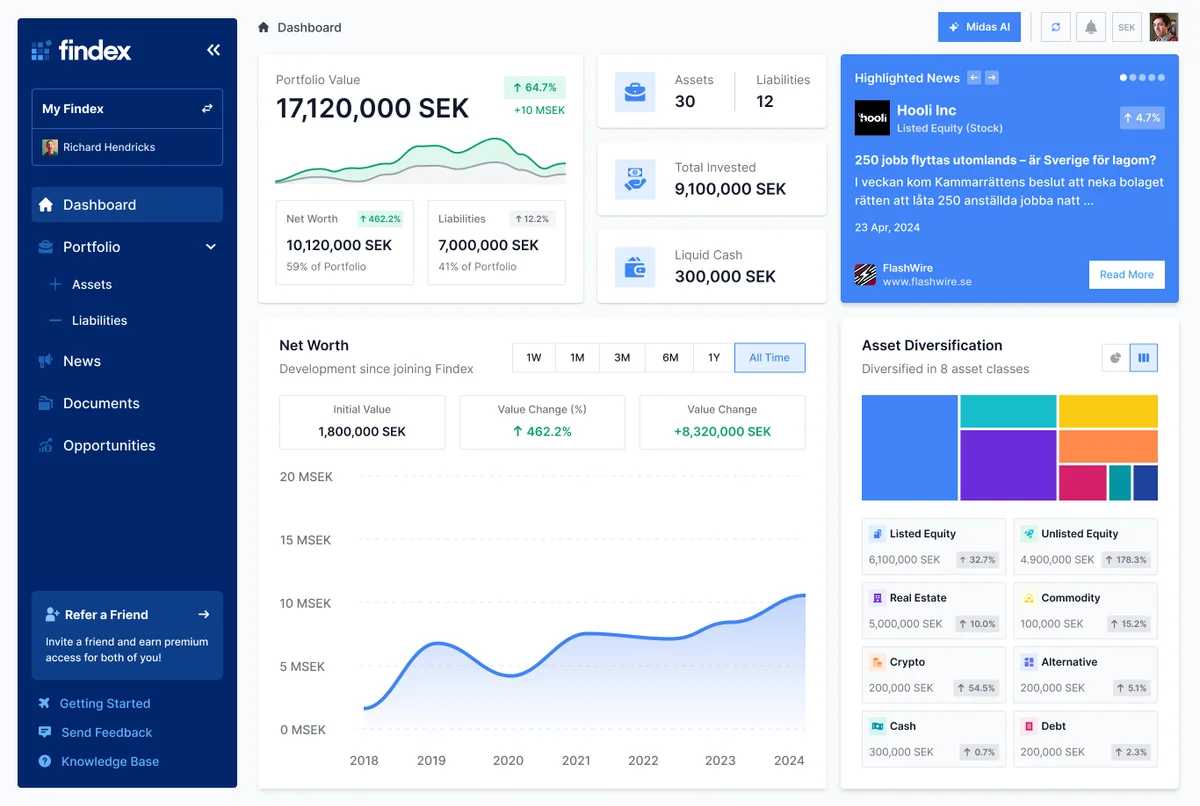
Open banking’s potential truly comes to life when combined with intuitive, user-focused platforms. At Findex, we aim to integrate open banking to provide better visibility and control over finances. By bringing financial data together into one streamlined interface, we hope to make financial tracking simpler and help users feel more confident in their decisions.
Key Benefits of Findex’s Open Banking Features
Streamline your finances with Findex—link accounts, track assets, and make smarter financial decisions with ease. Perfect for both casual investors and those managing complex portfolios.
Challenges and Future Prospects of Open Banking
Despite its considerable benefits, open banking faces challenges that could shape its future integration into financial services.
Regulatory and Compliance Hurdles
Global standards for open banking vary considerably. While regions like Europe and the UK have made significant strides with regulations like PSD2, other areas lag behind, creating inconsistencies that limit adoption.
Consumer Trust and Adoption
Public awareness of open banking remains limited, with many consumers wary of sharing financial data due to potential security risks. However, ongoing education campaigns and demonstrations of technological reliability are gradually addressing these concerns.
A Path Forward
The future of open banking lies in expanding its integration with diverse financial planning tools. Enhanced artificial intelligence and machine learning could be leveraged further to provide users with unmatched predictive insights. Additionally, partnerships between fintech and traditional banking institutions will likely increase, offering more seamless experiences for users.
Final Thoughts
Open banking represents a turning point in financial modernization, laying a foundation for greater transparency, efficiency, and accessibility. The ability to link financial accounts into one cohesive view is empowering individuals, private banking clients, and wealth management professionals alike to make smarter financial decisions. Platforms like Findex capitalize on this transformation to deliver superior asset visibility and tracking.
By adopting an open banking-enabled system, you can centralize your finances, improve clarity, and take steps toward smarter financial planning—all without the hassle of managing accounts separately.
Related blogs to "The Role of Open Banking in Modern Financial Services":
Private Banking vs. Wealth Management: What’s the Best Fit for You?
Portfolio Diversification: The Key to Minimizing Risk and Maximizing Returns
The Future of Financial Services: Trends in Private Banking and Wealth Management
How Private Banking Enhances Financial Flexibility for High-Net-Worth Individuals
Keep reading
Related guides
What Is Value Investing? A Guide to the Strategy Behind Buffett and Graham
Value investing means buying assets priced below their intrinsic value. Learn the core principles, metrics, and how value investors identify opportunities.
From Excel Chaos to Digital Private Banking: Why We Built Findex
The Best Kubera Alternatives in 2026
Your complete net worth, finally in one place.
Join investors using Findex to consolidate, track, and grow their portfolios. One view of everything you own.
No payment information required.