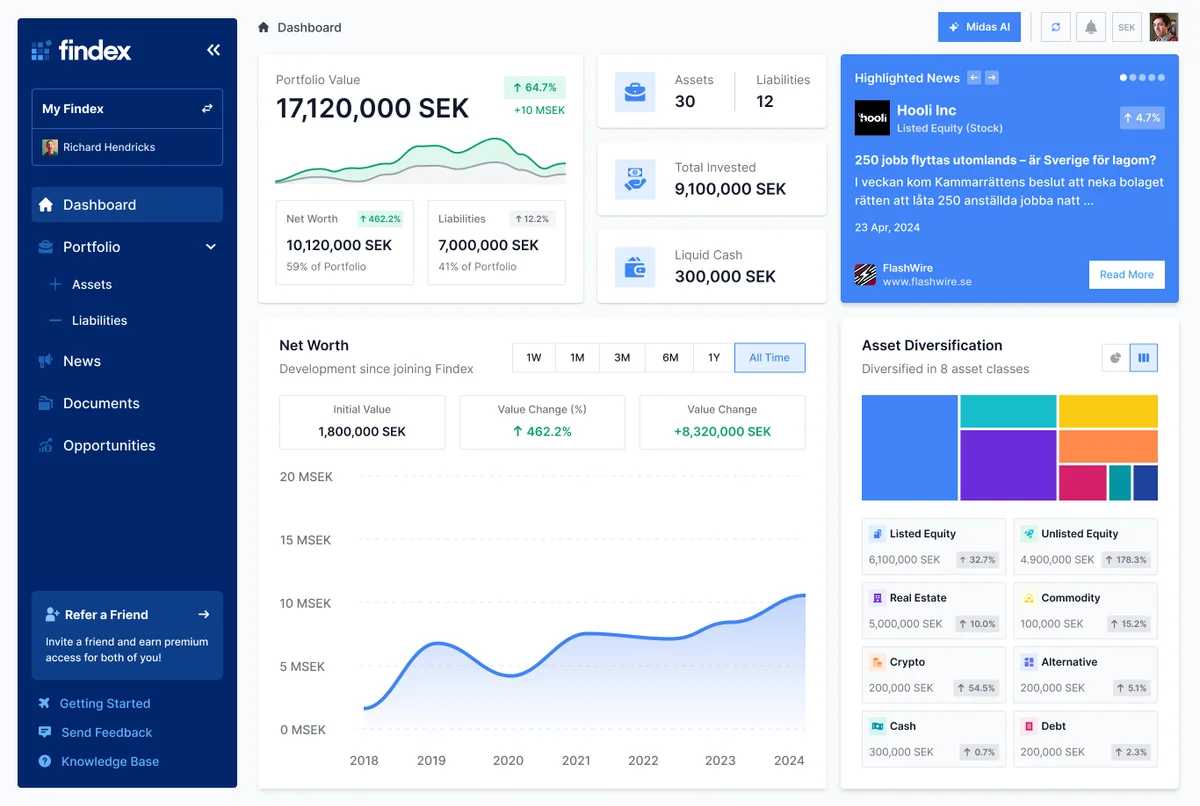

Portfolio Diversification: The Key to Minimizing Risk and Maximizing Returns
Discover how portfolio diversification minimizes risks and maximizes returns. Explore equities, bonds, real estate, and global assets with expert strategies.

Investing always carries a degree of risk, but the right strategies can help minimize potential losses while maximizing rewards. Among these strategies, portfolio diversification stands out as a powerful tool. By spreading investments across various asset classes, industries, and geographic regions, you create a balanced portfolio that guards against volatility and enhances long-term returns.
Whether you’re a high-net-worth individual exploring private banking or a client seeking to optimize wealth management services, understanding and applying the principles of diversification can position you for sustained financial success.
What Is Portfolio Diversification?
At its core, portfolio diversification is the practice of allocating investments in such a way that reduces exposure to any single asset or risk. The idea is simple but effective: don't put all your eggs in one basket.
Key Benefits of Diversification
1. Risk Minimization:
Diversifying spreads your investments across different instruments, reducing the impact of poor performance in any one area.
2. Stability in Volatility:
A well-balanced portfolio can weather market fluctuations more effectively, maintaining consistent growth even during downturns.
3. Maximized Returns:
Exposure to a variety of markets and sectors increases the potential for gains across different cycles or economic conditions.
Balancing Risk and Reward
Imagine a scenario where a portfolio is invested solely in equities. A market downturn could severely erode its value. However, if the portfolio were diversified across equities, bonds, and real estate, losses in one area may be offset by gains in another. Diversification supports steady growth, even if certain markets face challenges.
Key Asset Classes to Include in a Diversified Portfolio
Effective diversification is not just about spreading investments randomly. True success lies in strategically building a mix of assets that complement and counterbalance one another. Here are essential asset classes to consider:
1. Equities (Stocks)
Equities are a core component of most portfolios. They offer substantial growth potential but are also subject to higher volatility. Incorporating a mix of domestic and international equities can further diversify this sector, ensuring exposure to both established and emerging markets.
2. Bonds
Fixed-income investments like bonds offer reliability and income with lower risk. Government bonds, corporate bonds, and municipal bonds provide cushioning during market downturns, acting as a counterweight to more volatile asset classes.
3. Real Estate
Real estate assets, including physical property or Real Estate Investment Trusts (REITs), add tangibility to a portfolio while providing consistent income streams. Real estate often remains stable even when financial markets falter, making it a valuable diversification tool.
4. Alternative Investments
Alternative assets include private equity, hedge funds, commodities, and venture capital. These investments further differentiate your portfolio but are typically reserved for experienced or high-net-worth investors due to their complexity.
5. Global Asset Management
Geographic diversification is as important as diversification across asset types. By including international markets, you hedge against local economic downturns and tap into growth opportunities abroad.
Practical Example of a Diversified Portfolio
A private banking client might hold 40% equities (30% domestic, 10% international), 20% bonds, 20% real estate, and 20% alternative investments. This blend ensures balance, with growth opportunities offset by safer, stable investments.
Private Banking and Wealth Management Approaches to Diversification
Private banking and wealth management services excel at creating tailored diversification strategies for clients. These institutions go beyond the basics, using advanced tools, expert research, and deep client understanding to construct portfolios designed for specific goals.
Case Example 1: High-Net-Worth Individual
A private banking client with a $10 million portfolio seeks growth while protecting existing wealth. Their advisor diversifies their assets across sectors, such as technology, healthcare, and energy, and incorporates international equities, fixed-income securities, and private equity investments.
Case Example 2: Wealth Management Client
A wealth management client nearing retirement prioritizes capital preservation and income generation. Their portfolio skews toward bonds, balanced with dividend-paying equities and REITs to sustain a reliable income stream.
The Role of Technology in Modern Diversification
Innovative platforms like Findex simplify the tracking and management of diversified portfolios. By integrating real-time analytics, centralized reporting, and global asset tracking, tools like these empower investors to monitor performance proactively and make informed adjustments as needed.
How to Start Diversifying Your Portfolio
Comprehensive diversification requires a strategic, step-by-step approach tailored to your financial goals. Here’s how to get started:
Step 1. Define Your Objectives
Understand your risk tolerance, time horizon, and growth expectations. A young investor saving for long-term goals may focus on equities and alternative investments, while someone nearing retirement may prioritize bonds and real estate.
Step 2. Assess Your Current Portfolio
Evaluate your existing investments to identify areas of over-concentration. For example, if a significant portion of your portfolio is in technology stocks, consider diversifying into other sectors or asset classes.
Step 3. Work with Financial Experts
Leverage the expertise of private banking or wealth management advisors. Their insights and access to advanced tools like global asset management systems can help refine your strategy.
Step 4. Regularly Rebalance
Diversification is not a one-time effort. Periodic reviews help ensure your portfolio remains aligned with your goals, adjusting for market changes or new opportunities.
Step 5. Use Technology to Stay on Track
Platforms like Findex allow seamless monitoring of portfolio performance, offering insights across all asset classes and regions.
Why Diversification Matters
Diversification is more than just a buzzword; it’s a practice deeply rooted in financial discipline. By mitigating risks and enhancing the potential for returns, diversified portfolios provide the stability investors need to achieve their objectives over time.
Whether you’re managing vast wealth through private banking or building toward your first financial milestone, diversification ensures no single event or market influences your entire portfolio.
Secure Your Wealth Through Diversification
Investing wisely is not just about choosing the right assets; it’s about managing them strategically to balance risk and reward. Explore how private banking, wealth management, and tools like Findex can support smarter portfolio construction.
Secure your wealth through diversification. Start your smarter investment strategy today.
Related blogs to "Portfolio Diversification: The Key to Minimizing Risk and Maximizing Returns":
Private Banking vs. Wealth Management: What’s the Best Fit for You?
How Private Banking Enhances Financial Flexibility for High-Net-Worth Individuals
The Role of Open Banking in Modern Financial Services
The Future of Financial Services: Trends in Private Banking and Wealth Management
Keep reading
Related guides

How Should I Structure a Modern Investment Portfolio? A Guide to Building a Future-Proof Investment Framework
Move beyond the outdated 60/40 model. Learn how to structure a modern investment portfolio using systems thinking, liquidity tiers, and functional asset allocation for optimal performance.

How Do Private Investments Fit Into a Modern Investment Portfolio? A Complete Integration Guide
Learn how to integrate private investments into a modern portfolio. Understand their role, structural risks, and how unified solutions like Findex enhance portfolio oversight and allocation management.

How to Measure Your Portfolio’s True Performance
Learn to measure your portfolio's performance with time-weighted and money-weighted returns, risk-adjusted metrics, and benchmarking strategies.
Your complete net worth, finally in one place.
Join investors using Findex to consolidate, track, and grow their portfolios. One view of everything you own.
No payment information required.