
10-Year Treasury Yield Hits Highest Level Since 2007 as AI Safety Fears Slam Chip Stocks
The 10-year Treasury yield hit 5.04% on Tuesday as AI safety warnings from Anthropic and OpenAI triggered a chip-stock selloff ahead of the Fed's rate decision.

The yield on the 10-year US Treasury note climbed to 5.04% in early Tuesday trading, its highest level since 2007, after first breaching the 5% threshold on Monday for the first time since October 2023. Anthropic chief executive Dario Amodei and leaders at OpenAI and xAI triggered the move by calling publicly for a slower pace of AI development, citing safety risks.
What happened
Chip stocks bore the brunt of the reaction. The Philadelphia Semiconductor Index dropped 5.9% on Monday, its worst session in months. Nvidia fell 3.4%, Micron Technology lost more than 5%, and Broadcom and Advanced Micro Devices each declined more than 4%. The S&P 500 closed down 0.5% and the Nasdaq Composite slipped 0.6%.
Key figures from Monday's session:
- 10-year Treasury yield: touched 5.01% intraday, closing near 4.96%
- Philadelphia Semiconductor Index: -5.9%
- Nvidia: -3.4%
- Micron Technology: more than -5%
Brent crude added to the inflation picture, settling at $105.68 a barrel after Saudi Arabia closed its East-West pipeline following drone attacks on the facility.
Why it matters
Rising long-term yields raise the discount rate applied to future earnings, a mechanic that hits richly valued growth stocks hardest. AI infrastructure names have carried much of the S&P 500's gains this year, so a slowdown in projected chip demand cuts against the same concentration that boosted returns on the way up. Investors holding portfolios weighted toward a handful of AI-linked names are now seeing that weighting work against them.
The timing compounds the effect. Wednesday brings the Federal Reserve's rate decision, and traders assign roughly a 93% probability to a 25-basis-point hike that would take the federal funds target range to 3.75%-4.00%. Chair Kevin Warsh has withheld his own projection from the Fed's dot plot since June, a departure from precedent that leaves investors with less forward guidance than usual heading into the announcement.
What to watch next
The Fed announces its decision on Wednesday at 2pm Eastern time, followed by Warsh's press conference. Markets will parse any reference to AI-linked capital spending or chip demand alongside the standard inflation and labour-market commentary, given how directly Monday's selloff tied equity valuations to the AI buildout.
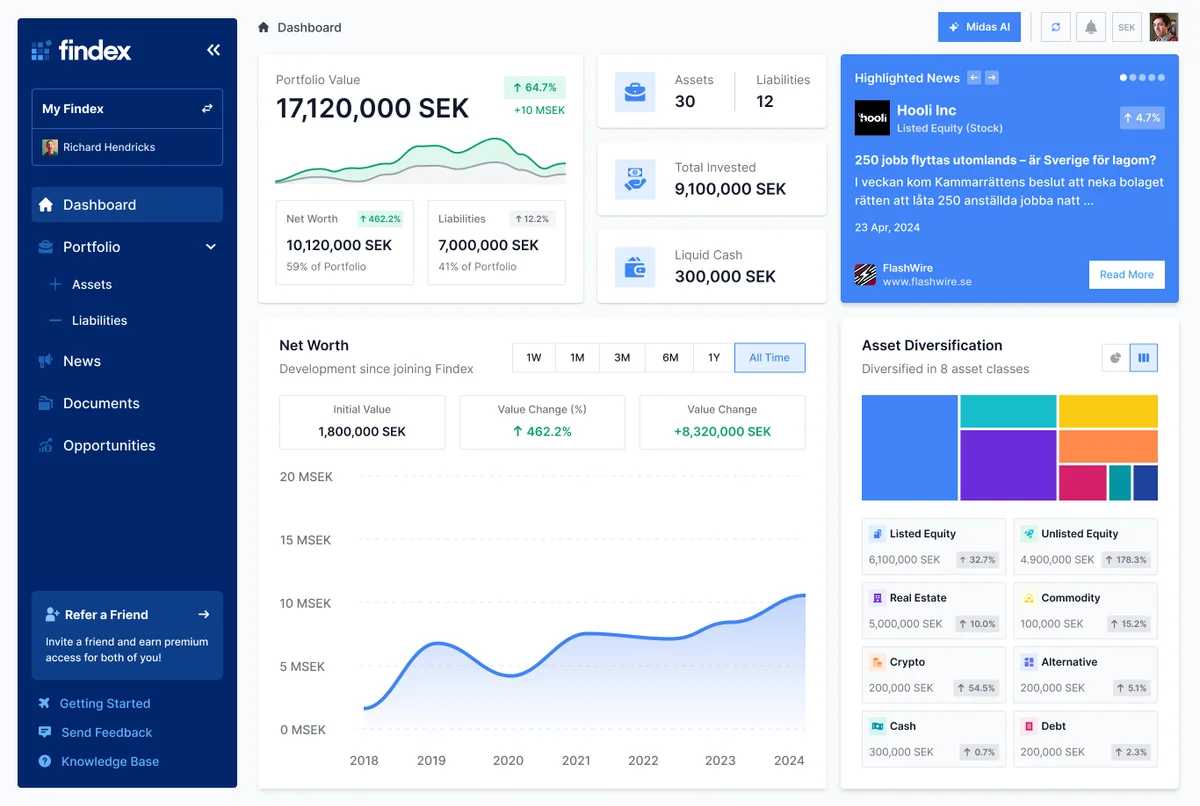
Portfolio trackers that consolidate holdings across brokers make it easier to see how much of a portfolio's recent gains sit in a small number of AI-exposed names, information that matters more once that concentration starts working against investors rather than for them.
Keep reading
Related trends

ECB Raises Rates to 2.50% as Iran War Fuels Euro Zone Inflation
The ECB lifted its deposit rate to 2.50% on September 10, its second hike this cycle, as energy inflation from the Iran conflict pushes prices higher.

Oil Nears $100 as Iran-Oman Hormuz Deal Nears Final Stage
Brent crude hit $97 as Iran and Oman near a Hormuz shipping deal, reviving inflation fears ahead of Friday's US CPI print and the Fed's next move.
Oil Surges Past $90 as US Strikes Reignite Strait of Hormuz Tensions
US strikes on Iranian rocket launchers near the Strait of Hormuz sent Brent crude above $90 on Monday, its highest level in months, reviving inflation risk.
Your complete net worth, finally in one place.
Join investors using Findex to consolidate, track, and grow their portfolios. One view of everything you own.
No payment information required.