
S&P 500 and Nasdaq Post Best Quarter Since 2020 as AI Stocks Drive Rally
The S&P 500 rose 14.8% and the Nasdaq 21.4% in Q2, the best quarterly gains since 2020, as AI and semiconductor stocks powered a broad market rally.

The S&P 500 gained 14.8% and the Nasdaq Composite rose 21.4% in the second quarter of 2026, the strongest quarterly performance for both indices since the second quarter of 2020. Semiconductor and AI infrastructure stocks led the advance, and the rally held even as a brief US-Iran conflict over the Strait of Hormuz threatened to unsettle markets in June.
What Happened
The Dow Jones Industrial Average closed the quarter at a fresh record above 52,000 points, up roughly 12.9% for Q2. Chip and AI infrastructure names supplied most of the gains, with the Philadelphia Semiconductor Index posting one of its strongest quarters on record. Markets shrugged off the Hormuz standoff after the US and Iran agreed to a ceasefire days before quarter-end, restoring shipping through the strait and easing the oil-price risk that had weighed on sentiment earlier in June.
Key Q2 2026 index gains:
- S&P 500: +14.8% (best quarter since Q2 2020)
- Nasdaq Composite: +21.4% (best quarter since Q2 2020)
- Dow Jones Industrial Average: +12.9%, closing above 52,000 for the first time
First-half performance was strong too: the S&P 500 rose 9.5% and the Nasdaq 12.8% over H1 2026, with the Dow posting its best first half since 2021.
Why It Matters
A rally this concentrated changes what "diversified" means for an index investor. Semiconductor and AI infrastructure names now carry an outsized share of S&P 500 and Nasdaq weight, so a fund tracking either index holds more concentrated exposure to a single theme than its label suggests. Capital also rotated within the AI trade during the quarter, moving from the largest software and platform names toward memory-chip suppliers as demand for AI hardware outpaced supply.
For investors tracking net worth across multiple accounts, a headline index gain of 14.8% can mask very different outcomes depending on sector weighting. A portfolio heavy in semiconductor and AI infrastructure exposure captured most of the quarter's gains; one weighted toward energy, consumer staples, or European equities captured considerably less.
What to Watch Next
Second-quarter earnings season starts in mid-July and will test whether AI infrastructure spending is converting into profit growth or simply inflating valuations. The Federal Reserve meets on July 29 and the European Central Bank on July 23, and either decision could reprice the rally if policymakers signal a slower pace of cuts than markets currently expect. Nasdaq forward valuations are elevated relative to their five-year average, leaving less room for error if earnings disappoint.
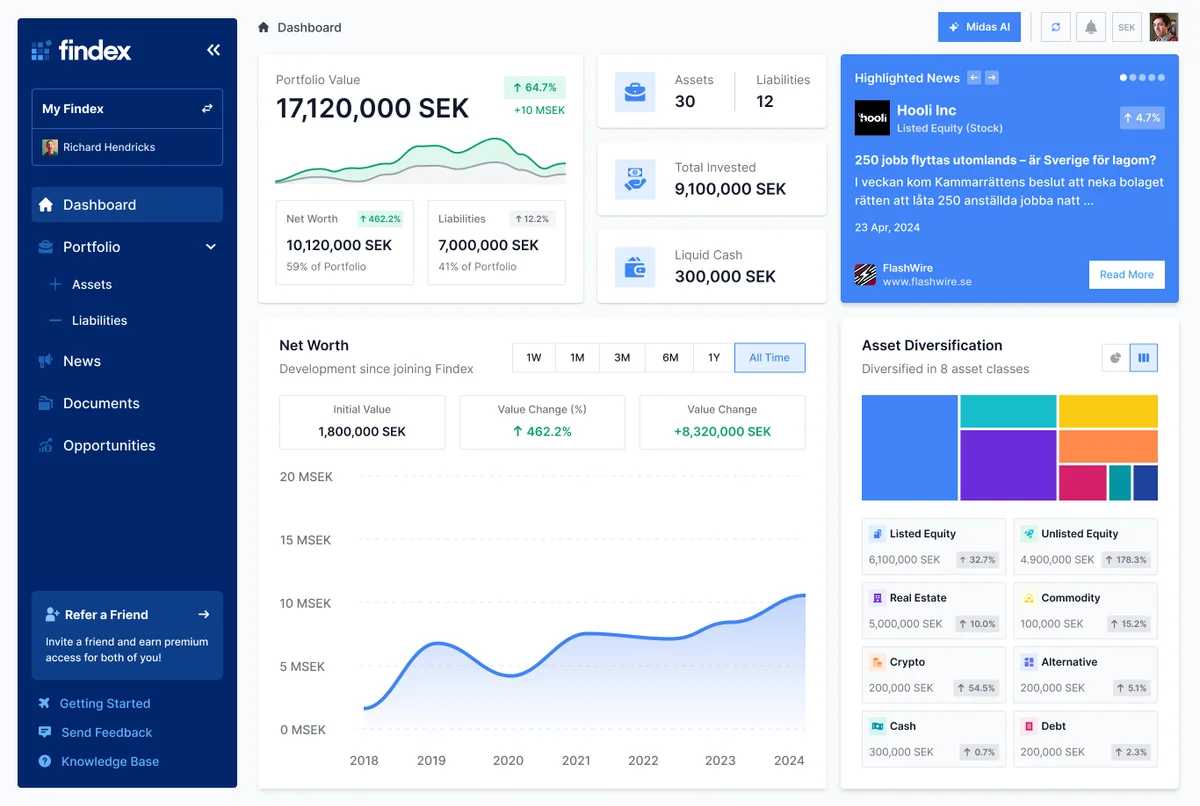
Portfolio trackers that show sector and asset-class weighting across every connected account make it easier to see how concentrated a portfolio has become after a rally like this one, rather than relying on a single index return to judge performance.
Keep reading
Related trends
John Ternus Becomes Apple CEO as Tim Cook Steps Into Chairman Role
John Ternus becomes Apple CEO on September 1, ending Tim Cook's 15-year run, as investors weigh what the leadership change means for index-heavy portfolios.
Nvidia Jumps 7% on Blowout Earnings, Deepening Its Grip on the S&P 500
Nvidia's fiscal second-quarter results and a 70% revenue growth forecast lifted global chip stocks and pushed its S&P 500 weighting toward a record 7.8%.

Shein Prices Hong Kong IPO at $27 Billion, Down 70% From Its Private Peak
Shein's Hong Kong IPO values the fast-fashion retailer at up to $27bn, a 70% drop from its 2022 peak, after failed listings in New York and London.
Your complete net worth, finally in one place.
Join investors using Findex to consolidate, track, and grow their portfolios. One view of everything you own.
No payment information required.