SEC Proposes Wider Retail Access to Private Funds, Including 20% Performance Fees
The SEC voted to propose 20% performance fees, a wider accredited investor test and looser interval fund redemptions to open private markets to retail.
The US Securities and Exchange Commission voted on Wednesday 30 September to propose three rule changes that would widen retail investors' access to private markets, including performance fees of up to 20% for registered investment advisers. Each proposal will open for 60 days of public comment.
What happened
The commission approved the package at an open meeting chaired by Paul Atkins, who said one of his priorities is to "facilitate the ability of individual investors to participate in private markets while at the same time protecting those investors from bad actors and fraud."
The three proposals:
- Performance fees: registered investment advisers could charge fees of up to 20% based on a fund's performance, bringing retail-facing fee structures closer to those used by hedge funds.
- Accredited investor test: certified public accountants and chartered financial analysts would qualify as accredited investors by credential. The current test mostly requires net worth above $1m excluding a primary residence, or income above $200,000 ($300,000 with a spouse).
- Interval funds: the rules would give interval funds more flexibility on redemptions. SEC division director Brian Daly said the funds have "tremendous utility" but that prescriptive rules limit their adoption.
The meeting was also Commissioner Hester Peirce's last. The five-member commission now has two Republican members, and the White House has not named replacements.
Why it matters
Private equity, private credit and early-stage companies have been reserved largely for institutions and wealthy individuals. The proposals fit a wider administration push to open those assets to a broader group of savers, and add to steps already taken this year.
Critics say the changes weaken investor protections. Benjamin Schiffrin of Better Markets pointed to the recent surge in redemption requests at interval funds: "now hardly seems like the time to further expose retail investors to these funds."
For investors, the practical effect would be more products on offer and more people eligible to buy them. It would also bring performance-fee structures and illiquid holdings into portfolios that previously held mostly listed assets.
What to watch next
The comment periods run for 60 days, so final rules are unlikely before 2027. Three points will decide how far the changes go:
- whether the SEC keeps the 20% performance fee cap in the final text
- how much redemption flexibility interval funds receive, given current withdrawal pressure
- whether a smaller commission changes the vote count on the final rules
The proposals apply to US-registered advisers and funds. European investors face a separate regime: the EU's ELTIF 2.0 framework has widened retail access to private assets since 2024, and Nordic investors can already reach some private funds through platforms and feeder structures.
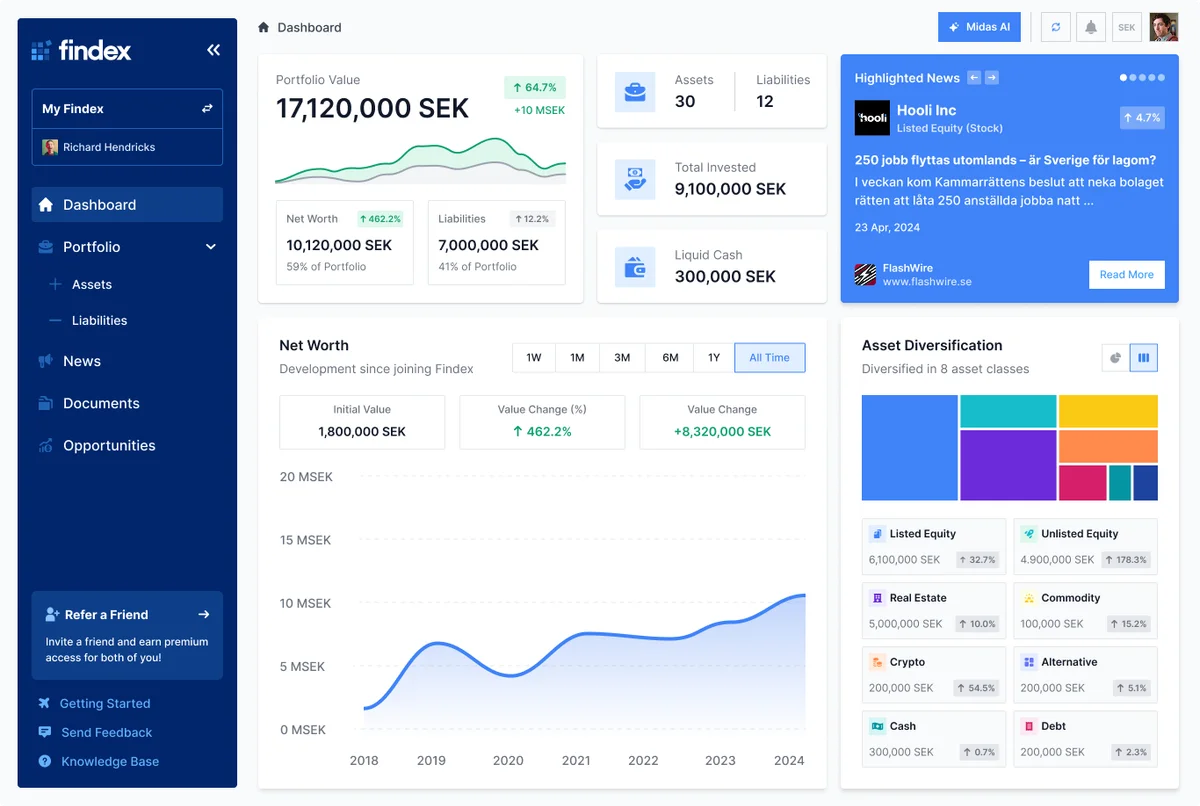
Investors who hold private fund interests alongside listed shares have to track valuations, fees and lock-up periods in one place. Portfolio trackers that consolidate holdings across providers make that practical as private assets move into retail portfolios.
Keep reading
Related trends

SEC Prepares Plan to Open Private Markets to Retail Investors
The SEC has proposed letting retail investors access private equity and credit through registered funds, and letting advisers charge wider performance fees.
Robinhood's Second Private Markets Fund Debuts With a Hedge Fund Fee Structure
Robinhood's second venture fund, RVII, began trading on the NYSE Wednesday, layering a 20% profit fee onto retail investors' access to private startups.

Nvidia Partners With Wall Street Giants on $500 Billion AI Financing Platform
Nvidia has partnered with BlackRock, Goldman Sachs and four other firms on a $500bn financing platform that treats AI chips as loan collateral.
Your complete net worth, finally in one place.
Join investors using Findex to consolidate, track, and grow their portfolios. One view of everything you own.
No payment information required.