
Asset
Understand what an asset is and why it's crucial for your financial health. Learn the different types of assets and explore effective strategies to build them.
› See video transcript
What actually makes you wealthy isn’t your income — it’s your assets.
An asset is anything you own or control that has economic value and can benefit you in the future. In simple terms, assets are what build your net worth.
There are two main types. Physical assets, like real estate or collectibles, and financial assets, like cash, stocks, bonds, and retirement accounts.
Financial assets matter most because they’re liquid — you can turn them into cash when you need it.
Building wealth isn’t about spending more. It’s about consistently turning income into assets that grow, protect you, and compound over time.
An asset is formally defined as any resource with economic value that an individual, corporation, or country owns or controls with the expectation that it will provide a future benefit.In personal finance, assets are the foundational components of wealth. The primary objective is to accumulate a greater value of assets than liabilities, creating a positive net worth. This financial position provides a buffer against unforeseen financial shocks, such as job loss or medical emergencies, as assets can be liquidated to cover obligations.
What Are the Different Types of Assets?
Assets can be broadly classified into two principal categories: physical assets and financial assets.
Physical Assets:
These are tangible items of value that you own. Common examples include real estate (your primary residence or investment properties), vehicles, art, and collectibles. While they hold value, their conversion to cash—a process known as liquidation—can be time-consuming.
Financial Assets:
These are intangible assets whose value is derived from a contractual claim. This category includes cash held in savings accounts, stocks (equities), bonds (debt instruments), and interests in retirement accounts like a 401(k) or an Individual Retirement Account (IRA). Financial assets are typically more liquid than physical assets, meaning they can be converted into cash more quickly and easily.
Why Understanding Asset Types Matters
For effective personal financial management, an emphasis is often placed on building a portfolio of financial assets due to their liquidity. A well-funded emergency fund, held in a highly liquid account like a savings or money market account, is a critical component of a sound financial plan.
How Do I Build Assets?
Building a robust asset base is a long-term strategic process that can be approached through several disciplined methods.
1. Systematic Savings and Investing:
The most fundamental method for asset accumulation is consistent saving. By allocating a portion of your monthly income to a savings account, you establish a foundational asset. To accelerate growth, these savings should be channeled into investment vehicles. Retirement accounts such as a 401(k) or an IRA offer tax advantages that can significantly enhance the rate of accumulation over time through the power of compounding. Investing in a diversified portfolio of stocks and bonds allows your capital to work for you, generating returns and building wealth.
2. Investment in Appreciating Physical Assets:
Another strategy involves acquiring physical assets with the potential for appreciation. Real estate is a primary example. Purchasing a property, particularly one that can be improved through renovation (a "fixer-upper"), can lead to a substantial increase in its market value. This increase creates equity—the difference between the property's market value and the outstanding mortgage balance. This equity is a valuable asset that can be accessed through a home equity loan, a line of credit, or realized upon the sale of the property.
The Path to Long-Term Wealth
Ultimately, building assets requires a disciplined approach to saving, a strategic plan for investing, and a clear understanding of the difference between assets that generate income and those that appreciate in value.
Keep learning
Related terms
Annuity
Learn what an annuity is and how it provides income. Analyze the pros, cons, and key differences from a 401(k) to inform your financial strategy.
Balance Sheet
What is a balance sheet? Learn its key components—assets, liabilities, and equity—and how to analyze a company's financial health with key ratios.
Blockchain
Understand what blockchain is, how it works, and its key features. Explore public, private, and consortium blockchains to see their impact on finance.
Track your portfolio with AI
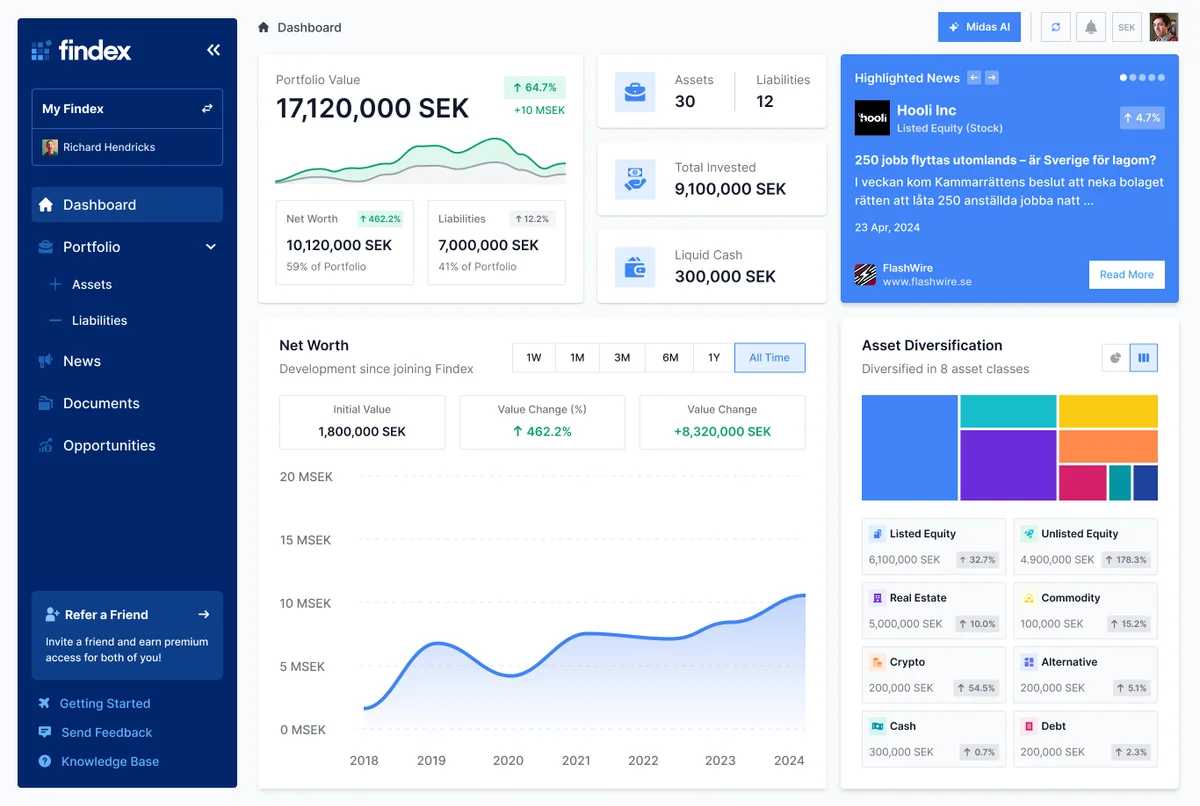
Findex consolidates your entire portfolio — listed equities, private companies, real estate, and more — in one place.
No payment information required.